


The fastener industry of each country has independent implementation standards, which serve as the core basis for bolt production, model selection and delivery. At present, six major standard systems are widely adopted in domestic and foreign trade business, including GB (Chinese National Standard), ANSI (American National Standard), DIN (German Industrial Standard), ASME (American Society of Mechanical Engineers Standard), JIS (Japanese Industrial Standard) and BS (British National Standard).
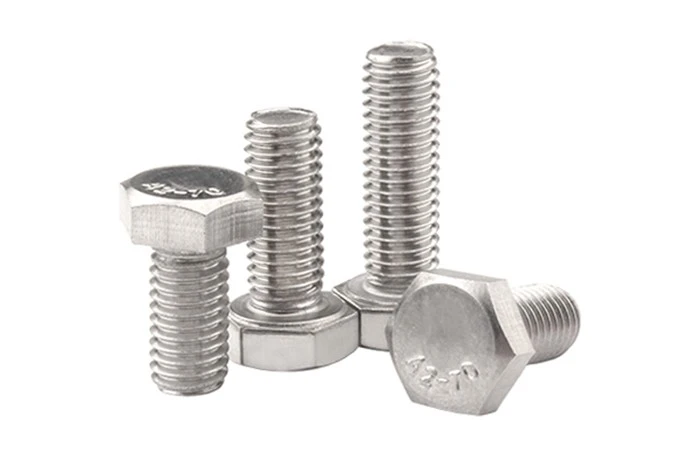
Chinese national standards are divided into three categories: mandatory national standard (GB), recommended national standard (GB/T) and internal national industrial standard (GBn). Commonly used specifications such as GB30 and GB5783 are mandatory national standards. Apart from basic dimensional differences in head width across flats and head thickness, the core distinction among various standards lies in the thread specification system.
According to thread measurement systems, bolts are classified into three types: metric thread, American thread and British Whitworth thread. Standards including GB, DIN and JIS adopt millimeter measurement and are collectively defined as metric threads; ANSI and ASME adopt inch measurement and are defined as American threads; the BSW British standard also uses inches and corresponds to the traditional Whitworth thread system.
There are clear differences in the thread flank angle of the three thread types: metric thread features a 60° flank angle, American thread also adopts 60°, while British Whitworth thread adopts 55°. Differences in measurement units lead to completely different thread marking methods.
Metric thread marking example: M16-2×60, which indicates a nominal diameter of 16mm, a thread pitch of 2mm and a bolt length of 60mm.
American and British thread marking example: 1/4-20×3/4, which represents a nominal diameter of 1/4 inch (1 inch = 25.4mm), 20 threads per inch and a bolt length of 3/4 inch. American threads are additionally marked with UNC or UNF to distinguish coarse and fine thread specifications.
GB and DIN standards are the most commonly used for domestic sales. Typical general fastener standards include GB30, GB5783, GB5782, GB52, GB6170, GB818, GB819, GB845, GB846, GB70, DIN912, DIN933 and DIN931. The old national standards have been fully updated: the old GB30 has been replaced by the new GB5783, and the old GB52 nut standard has been replaced by GB6170.
China released a new version of national fastener standards in 1986, commonly known as the new standard. The mainstream specifications include GB5780, GB5781, GB5782, GB5783 and GB5784. GB5780 refers to Class C precision hexagonal head coarse-shank semi-threaded bolts, which can be replaced by Class A/B precision full-threaded bolts of GB5782. GB5781 is a Class C precision hexagonal head full-threaded bolt, replaceable by Class A/B precision GB5783 bolts. GB5784 represents thin-shank semi-threaded hexagonal bolts.
The main differences between the new and old national standards focus on the head width across flats of M8, M10, M12, M14 and M22 bolts. Except for M22, the new standard reduces the head width across flats by 1mm for M8, M10, M12 and M14, with corresponding dimensions of 13mm, 16mm, 18mm and 21mm respectively. In contrast, the new standard M22 bolt has a 2mm larger head width across flats than the old version. The difference in head thickness is negligible, allowing general interchangeability under non-precise working conditions.
Dimensional differences between the new national standard and German DIN standard are also concentrated on M10, M12, M14 and M22 specifications. The head width across flats of new standard M10, M12 and M14 bolts is 1mm smaller than that of DIN standard, while the new standard M22 is 2mm larger. All other specifications are dimensionally consistent and fully interchangeable in assembly.
Common mainstream standards for hexagonal nuts include GB52, GB6170, GB6172 and DIN934. GB6170 is a thickened nut with greater thickness, while GB6172 is a thin-type nut.
Differences in width across flats: For M8 nuts, DIN934, GB6170 and GB6172 feature a 13mm width across flats, 1mm smaller than the 14mm of GB52. For M10 nuts, DIN934 and GB52 adopt 17mm, 1mm larger than the 16mm of GB6170 and GB6172. For M12 nuts, DIN934 and GB52 adopt 19mm, 1mm larger than the 18mm of GB6170 and GB6172. For M14 nuts, DIN934 and GB52 adopt 22mm, 1mm larger than the 21mm of GB6170 and GB6172. For M22 nuts, DIN934 and GB52 adopt 32mm, 2mm smaller than the 34mm of GB6170 and GB6172.
GB6170 and GB6172 nuts have identical width across flats and only differ in thickness. They are interchangeable in conventional working conditions except for differences in locking stroke caused by thickness variation.


