


Nut
What is Nut
A screw nut is a threaded metal fastener that is used to securely hold objects together. It consists of a cylindrical shape with internal threading and is generally used with bolts, screws, or studs to create a secure, threaded connection. The screw nut is tightened onto the threaded shaft or bolt to prevent it from coming loose or being unscrewed. They come in various sizes, materials, and shapes to suit a wide range of applications.
Advantages of Nut
Simplicity
Screw nuts are easy to use and have a simple construction, making them ideal for a wide range of applications.
Precision
Screw nuts are designed to provide a precise fit with the threaded shaft, ensuring a secure and stable connection.
Durability
Screw nuts are made from high-quality materials, such as stainless steel or brass, ensuring that they are strong and resilient enough to withstand mechanical stresses and wear and tear.
Compatibility
Screw nuts can be used with a variety of shafts and bolts, making them versatile and adaptable to different applications.
Low friction
The screw nut's threads are designed to create a low friction surface between it and the shaft, allowing for smooth and precise rotational movement.
Tightening control
Screw nuts are designed to provide a tight and secure grip, allowing the user to precisely control the amount of force exerted on the shaft.


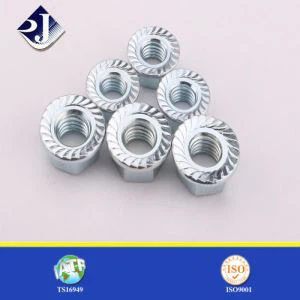
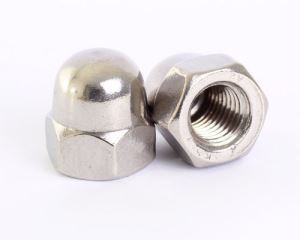


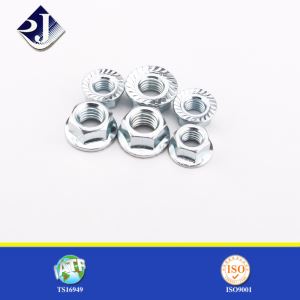


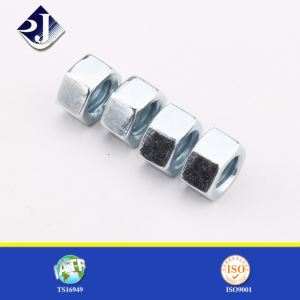
The main types of nuts of our company are hexagon nuts, flange nuts, square nuts, with more than 20 years of production experience, can customize various types of nuts for you.
Nuts are parts that connect mechanical equipment closely. Only nuts and bolts of the same specification can be connected together through the screw inside. Therefore, as long as the bolt is used, the nut is basically required to cooperate with the nut. The corresponding application range is also very wide, such as construction machinery, wind power generation equipment, metallurgical equipment, rail transit, public facilities, etc.
product advantages
Rich experience
Dedicated to strict quality control and attentive customer service, our experienced staff is always available to discuss your requirements and ensure complete customer satisfaction.
Advanced equipment
We take great measures to ensure that we work with the industry' s highest quality equipment and that our equipment is regularly and meticulously maintained.
High quality products
We always put customer needs and expectations in the first place, refine on, continuous improvement, to seek every opportunity to do better, to provide customers with their expectations of quality products, to provide customers with the most satisfactory service at anytime.
Professional service
We can accept factory inspection and goods inspection at any time. Technical discussion, research and development of new products, and complete after-sales service.
What Is The Difference Between Nuts, Bolts, Screws And Studs


Bolt
Bolts are widely used in detachable connections in mechanical manufacturing, and are generally used in conjunction with nuts (usually plus a washer or two washers)
Nut
A nut is a small metal object with a hole in the middle that has a corrugated hole. These curved holes are known as threads. Nuts are used as a fastening device. It is important to note that evens though nuts are used as a fastening device, they cannot be used without bolts. To understand this, we have to understand the shape of walnuts. The outer part of its body can be shaped either way, but it is mostly hexagonal cap or circular in shape.
Screw
The screw is usually used alone (sometimes with a washer), usually for tightening or tightening, and should be screwed into the internal thread of the body.
Stud
Studs are mostly used to connect one of the connected parts with a large thickness, and need to be used where the structure is compact or the bolt connection is not suitable due to frequent disassembly. Studs are generally threaded at both ends (single-end studs are threaded at one end). Usually one thread is firmly screwed into the body of the component, and the other end is matched with a nut to play the role of connection and fastening. To a large extent, it also has a fixed distance function.
Wood screws
Wood screws are used to screw into wood to connect or fasten.
Self-tapping screws
The working screw hole matched with the self-tapping screw does not need to be tapped in advance, and the internal thread is formed while the self-tapping screw is screwed in.
Washer
The washer is placed between the supporting surface of bolts, screws, nuts, etc. and the supporting surface of the workpiece to prevent loosening and reduce the stress on the supporting surface.
Retaining ring
The retaining ring is mainly used to position, lock or stop the parts on the shaft or in the hole.
Pin
Pins are usually used for positioning, can also be used to connect or lock parts, and can also be used as overload shearing elements in safety devices.
Rivets
The rivet has a head at one end, and the shank has no thread. When in use, the rod is inserted into the hole of the connected piece, and then the end of the rod is riveted to play the role of connection or fastening.
Types of Nuts
1. Hexagon nuts
Hex nuts have a six-sided driving surface. They' re a common sort of nut used to connect wood and metal components with bolts of the same size and thread type.
2. Flange nuts
Flange nuts are a kind of nuts with flanges on the basis of hexagonal nuts, so they are also called hexagonal flange nuts, nuts with gaskets, etc. The flange of the flange nut can be regarded as an integral gasket, which can distribute the pressure of the nut on the part being fixed, thereby reducing the possibility of part damage. And if it has a flange with a zigzag pattern, it can also increase the fastening effect.
Weld nuts
Weld nuts are permanent fasteners adapted to welding, with structural features like positioning bosses, standardized shapes, and thread protection. They form metallurgical bonds with base materials via welding, offering high strength, strong vibration resistance, and good sealing. Made from weldable steels with surface treatments balancing corrosion resistance and weld conductivity, they require professional welding equipment and precise controls, suiting high-vibration or heavy-load scenarios (e.g., automotive, construction machinery). Limitations include difficult disassembly and reliance on welding quality for reliability.
Cap nuts
Cap nuts, sometimes known as acorn nuts, are domed and feature a hexagonal driving surface. They are often hand installable. They screw onto the exposed threads of a bolt or threaded rod to protect them and provide a decorative look. Cap nuts may be found in projects like outdoor playsets and fences.
Nuts in squares
Because they have four relatively large driving surfaces, square nuts are easy to grab and spin. The nut' s form allows for a larger surface area to contact the fastening piece, providing better resistance to loosening and tightening. Use flat washers with square nuts to prevent the edges of the nuts from scratching the work piece.


Materials and Finishes for Bolts, Nuts, And Washers
Jinrui produces bolts, nuts and screws typically using materials such as carbon steel, stainless steel and alloy steel. Specific grades include ZT195, Q195, 35K, 45K, Q235, Q355, 20#, 45#, 40Cr, 35CrMo, ML08, ML20, ML40Cr, Q345, Q460, 42CrMo4, 34CrNiMo6, 10B21, 22A, 40Cr, SCM435, 304, 316, A2, A4, B8, B8M, C1 and so on.
Common surface treatments include electro galvanizing, hot-dip galvanizing, nickel plating, Dacromet coating, black oxide, phosphating, zinc-nickel alloy plating, etc. Of course, Jinrui supports OEM and ODM services, so we can also produce products according to your requirements.
How to Loosen Nuts Bolts And Screws
Penetrating oil
Commonly known as CRC, penetrating oil should be your first step in trying to loosen a nut, bolt, or screw. Spray the fastener and leave for 10 – 15 minutes to allow the oil time to penetrate the threads of the bolt or screw. Then use a wrench or screwdriver to undo the fastener. When you are trying to loosen a nut, penetrating oil is a good method to try first up.
Use a pair of hammers
Sometimes if a bolt is particularly stubborn, using a pair of hammers can help loosen the nut so you can remove it with a wrench. Hold the hammer against one of the flat sides of the nut – note, holding it against a corner will damage the nut – and hit the opposite side with the second hammer. After a few good knocks, try to undo it with a wrench. That' s another way to loosen a nut.
Use a hacksaw
If you have nuts, bolts, or screws that are badly rusted and all aforementioned methods have failed, you may have to use a hacksaw to remove the fastener. Simply saw one side of the nut and proceed to remove it with a wrench or screwdriver. This is where you' ve tried to loosen a nut, but it hasn' t worked.
If it' s still stuck, you may want to saw the opposite side and then lightly knock the remaining pieces off with a hammer. If you wish to avoid any rust-related fastener issues, try using stainless steel nuts, bolts, and screws.
Use a nut-splitter
If the position of the screw or bolt doesn' t allow for the use of a hacksaw, a nut-splitter is also very handy to help remove a rusted nut. It has a special chisel inside that screws into the nut and allows you to undo it with ease. So when you cannot loosen a nut, try a nut-splitter instead.
Drilling
When all else fails, and you just can' t loosen a nut, it' s time to get the drill out! Old and rusty fasteners can have a tendency to snap when too much pressure is applied or if you are trying to turn them the wrong way. When this happens, drilling out the remaining bit of a screw will be your best option.
Select the correct drill bit – about a millimetre less in diameter – then slowly start drilling out the remaining screw. Changing the drill rotation back and forth can sometimes help with guiding the screw out.
How Do I Properly Torque My Wheel Lug Nuts or Bolts
Finding the proper torque for lug nuts and lug bolts is the first step and can usually be found in the vehicle owner's manual. A torque wrench is a must so you can ensure you are applying the correct torque to your wheel nuts and bolts. While you don't need a torque wrench when changing a tire in an emergency, you will eventually use a torque wrench to loosen and retighten your wheel's nuts or bolts when you have the chance.
Make sure the stud or bolt threads are clean and dry and do not use oil, grease, or any other type of lubricant on the wheel hardware.
We recommend that you start threading your hardware manually to avoid threading or stripping wires. After hand tightening, use a torque wrench set to the appropriate torque as shown on the lug nut torque chart or vehicle owner's manual for the final tightening sequence based on the number of studs or bolts.
Our Factory
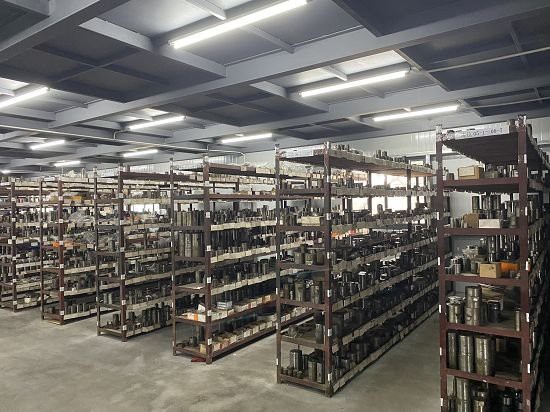
Shanghai Jinrui Norm Parts Supplies Co., Ltd. was built in 2001 which located in Baoshan District adjacent to the Bao Steel Group. Shanghai Jinrui is a fastener enterprise who owns a set of R & D, design, production and sales of high quality. Shanghai Jinrui owns total assets of RMB 50 million with area of 5000㎡. The business covers more than 35 countries. Now three branches of Shanghai Jinrui are Shanghai Xingrui Bolt Factory, Shanghai Xingrui Wire Steel Factory, and Shanghai Xingrui Hot heading Factory.




Certifications


