


Hex Socket Screw
What is Hex Socket Screw
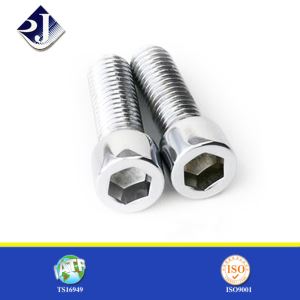
A hex socket screw is a type of screw that has a hexagonal recess in its head, which can be tightened or loosened with a hex key or Allen wrench12. Hex socket screws are also known as cap screws, cap bolts, or socket head cap screws3. They are commonly used in applications that require high strength and precision, such as machinery, automotive, and aerospace4.
Easier to produce
Hexagonal Socket Screws are mostly preferred over other similar types of screws for one major reason. They are extremely easy to produce. Its simple production process can be attributed to its simple design.
Displays considerable strength
A Allen bolt consists of six stress tolerating surfaces, which makes it more than capable of withstanding heavy screwing than other types of screws like the slotted or cross-shaped ones that only harbor two stress-bearing surfaces. Suffice to say, these screws can withstand stronger force than most of their counterparts.
Smooth surface finish
Screws are important to hold certain equipment or tool together. However, they can even result in an uneven, rough surface as they usually do not sink entirely into place. This is not the case with hex bolts. Stainless steel Allen screws, for instance, will sink entirely into their assigned space. As a result, the surface of a workpiece with such screws on them is smooth and bereft of any unattractive bumps caused by a half popped-out screw.
Easy to install
Aside from being very easy to produce, these screws are incredibly simple to install, especially for narrower assembly occasions. Hexagonal head screws are often the first choice of mechanics and engineers when it comes to maintenance, debugging, or assembly.
Hard to disassemble
Allen Bolts, once installed, can be excruciating to remove. This is a great advantage if you don’t want unauthorized individuals meddling with your tools or machines. That doesn’t mean they are impossible to disassemble of course. With the right wrench or a special screwdriver, one can proceed to disassemble them just as easily as they were installed in the first place.



Why Choose Us
Rich experience
Dedicated to strict quality control and attentive customer service, our experienced staff is always available to discuss your requirements and ensure complete customer satisfaction.
Advanced equipment
We take great measures to ensure that we work with the industry' s highest quality equipment and that our equipment is regularly and meticulously maintained.
High quality products
We always put customer needs and expectations in the first place, refine on, continuous improvement, to seek every opportunity to do better, to provide customers with their expectations of quality products, to provide customers with the most satisfactory service at anytime.
Professional service
We can accept factory inspection and goods inspection at any time. Technical discussion, research and development of new products, and complete after-sales service.
Types of socket head cap screws

Hex socket head cap screws – standard
The head is 1.5 times the nominal thread diameter, making it a smaller diameter than most other machine screw heads. When in use, the socket head cap screw is recessed within a counterbored hole so that the head is flush with the surface of the component being fastened. This result is a clean appearance. There are no protrusions on the socket cap screw that could catch skin or clothes.

Button head socket cap screws
A hex socket button head cap screw is sometimes referred to as a dome or round screw. Button head socket screws characterised by their wide, load-bearing surface, which helps them resist loosening. The look is popular for aesthetic purposes, while the lack of sharp edges offers a measure of safety. The bulbous socket button head enables more torque than normal for greater clamping force. For best results, use a retaining washer to lock in place.

Countersunk socket screws
Also called a countersunk hex head screw, or flat head socket screw. The shoulder slopes at an 82-degree angle if imperial screws and around 90 degrees if metric screws. The head is designed to sit flush with its surface or just below.

Hex-socket set screws
Used to generate a compressive load, which is opposite to a fastener tensile load created by bolts and most other screws. Socket head set screws hold parts beneath the cup – the concave, hollowed end – resisting rotational or lateral movement and standing up to vibration. When choosing your socket head set screw size, keep in mind that the screw diameter should be roughly one half of the shaft. The Allen key set socket head screw, as it' s sometimes called, is intended for light loads. For extreme conditions, socket head cap screws are your best bet.

Hex-socket shoulder screws
These types of socket head screws have a partially smooth shaft that enables some rotation and movement around the screw axis while the threaded end will usually use a nut to secure the screw's position. Socket shoulder screws are typically used when pre-tapped holes need alignment with some tolerance. They' re used in equipment and machines with components that require the ability and room to swing, slide or pivot. Hex socket drives resist cam-out better than other drives.
Material of Hex Socket Screw


Alloy steel
Contains enough alloying elements (other than carbon) to affect properties such as tensile strength; generally more responsive to heat and mechanical treatments than plain carbon steels.
Aluminum
Corrosion- and moisture-resistant material; excellent for outdoor use. Provides the strength of mild steel at only one-third the weight. Nonmagnetic.
Brass
Alloy of copper and zinc that resists rust and moderate atmospheric corrosion. Not high in strength, but is durable and conducts electricity. Often used for appearance. Nonmagnetic.
Nickel copper alloy
A corrosion-resistant metal alloy with excellent thermal conductivity, but slightly decreased electrical conductivity when compared to copper. Strong and fatigue-resistant.
Silicon bronze
An alloy of copper and tin with higher strength and hardness than brass and with silicon diffused into the metal at an elevated temperature. Very ductile with a high resistance to repeated stresses, corrosion, and fatigue.
Stainless steel
Contains a minimum of 12% chromium for exceptional resistance to extreme environmental conditions. Properties are highly anticorrosive. Not affected by scratching; however, not as strong as common alloy steels. May be mildly magnetic.
18-8 stainless steel
Contains approximately 18% chromium and 8% nickel. Provides excellent protection against rust and corrosion. The material of choice for prolonged outdoor use or exposure to salt spray and chemical fumes. May be mildly magnetic. Comparable to ASTM 300 Series and ISO A2.
316 stainless steel
Contains a minimum of 2% molybdenum for superior corrosion resistance and reduced risk of pitting in extreme environments. Is nonmagnetic and can't be heat treated or hardened. Comparable to ISO A4.
Steel
The most common fastener material. Available in these types
Alloy Steel contains enough alloying elements (other than carbon) to affect the fastener's properties; generally more responsive to heat and mechanical treatments.
Plain Steel (or Carbon Steel) contains only carbon and residual amounts of any other impurities. It is magnetic and malleable and can be either cast or wrought.
Socket Head Cap Screw Dimensions
The average socket cap screw head is around 1.5 times the diameter of the screw shank, and about as high as the shank is wide. However, alternative head designs for socket head cap screws include low head, button head and flat head varieties, intended for driving into countersunk holes and other application-specific mounting positions.
When looking to buy socket screws, note that the stated length of the product is typically measured from immediately under the head to the tip. This is the case for most screw types, but some specific varieties - thumb screws, for example - will often give stated length measurements that include the height of the head in the overall specification.
Most socket screw types are available in either metric or imperial measurements for length and diameter, depending on the particular manufacturer or supplier in question. Many leading brands and socket screw manufacturers will often provide a socket screw sizing chart or similar tool that can be referred to at the point of purchase.
While relatively small socket screw sizes (of diameters ranging from M2 to M6, and lengths of around 3mm to 20mm) tend to be more in demand across a wider range of tasks and applications, the full range of available sizes is considerable. Larger, heavier gauge and extra-long socket screws are not at all uncommon, particularly in widths of around M8 to M20, and lengths of anywhere up to 130mm.
Extra-long socket screws are often found in electrical plug sockets. Common electrical socket screw sizes include 40mm, 50mm, 60mm, 75mm and 100mm.
1. Head design
Hexagonal head screws have a large, flat hexagonal head, while socket head screws have a cylindrical head with a hexagonal sleeve.
2. Installation tools
Cap screws require a wrench to install, while socket head screws require an Allen or Allen key.
3. Thread type
Cap screws usually have full threads, while socket head screws usually have partial threads.
4. Applications
Cap screws excel in heavy-duty and structural applications, while socket head screws are favored in applications that require a low-profile design or access to tight spaces.


1. Machinery
Hex head screws are a common choice for fastening and disassembly in machinery projects and equipment assembly.
2. Construction
Hex screws are used in masonry and construction projects, especially those using steel and wood.
3. Tight spaces
With six access points, hex head screws are easier to access in tight spaces or spaces with only one side clearance for installation, tightening or removal.
4. Dirty applications
Hex screws with a solid head instead of an indented or recessed one are perfect for dirty applications, where debris and build-up might threaten the screw' s integrity over time. With no opening to fill, there' s no chance for clogging, and they' re easy to wipe down and shine if appearance or hygiene is important.
Tips for Installing Socket Head Cap Screws
We recommend using a socket wrench for installing socket head cap screws. This tool provides a secure grip on the screw, allowing for precise and efficient installation. When installing socket head cap screws, it is important to follow proper installation techniques. Start by aligning the screw with the threaded hole and insert it until it is fully engaged. Use the socket wrench to tighten the screw, applying even pressure to avoid stripping the threads. It is crucial to use the correct tightening method, such as torque specifications, to ensure the screw is properly secured. Common mistakes to avoid include over-tightening, which can damage the screw or the material being fastened, and under-tightening, which may result in a loose connection. Regular maintenance, such as checking for loose screws and applying thread-locking compound if necessary, can help prevent issues. If any problems arise, such as a stripped screw or difficulty tightening, refer to troubleshooting procedures or consult a professional for assistance.


Characteristics of Socket Head Cap Screws
- Socket head cap screws are designed with a hexagonal internal drive in the head, allowing them to be tightened and loosened with an Allen key.
- They offer advantages such as higher torque and clamping force compared to regular screws, reducing the number of screws needed in an application.
- Socket screws are commonly used in industrial production and assembly lines, including automotive, furniture, machine tooling, and steel fabrication.
- They are easy to install and provide impressive clamping strengths while maintaining a discreet and tidy finished look.
What are the uses of the Allen screws
Hexagon socket screws are often used on machinery. They mainly have the advantages of easy fastening and disassembly, and are not easy to slip. The Allen key is generally a 90° bend. The bent one end is long and short. When the short side is used, the long side of the hand can save a lot of force and can better tighten the screws.
The long end has a round head (a hexagonal cylinder resembles a sphere) and a flat head. The round head can be easily disassembled and installed with some inconvenient wrenches. The manufacturing cost of the hexagonal hex is much lower than that of the hexagonal hex. Its advantage is that the screw head (wrench position) is thinner than the internal hexagon, and some of the advantages are not replaced by the hexagonal hex. In addition, the use of low-cost, low-intensity, low-precision machinery uses hexagonal screws than the outer hexagon.

Our Factory
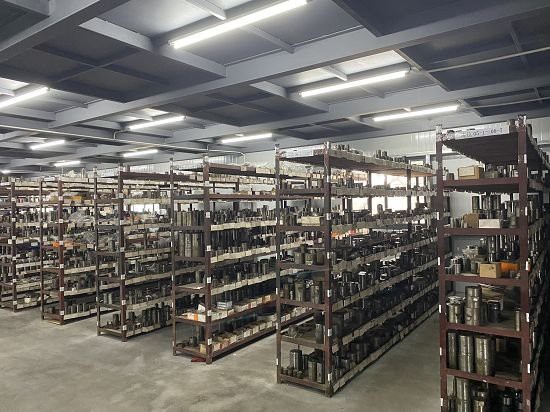
Shanghai Jinrui Norm Parts Supplies Co., Ltd. was built in 2001 which located in Baoshan District adjacent to the Bao Steel Group. Shanghai Jinrui is a fastener enterprise who owns a set of R & D, design, production and sales of high quality. Shanghai Jinrui owns total assets of RMB 50 million with area of 5000㎡. The business covers more than 35 countries. Now three branches of Shanghai Jinrui are Shanghai Xingrui Bolt Factory, Shanghai Xingrui Wire Steel Factory, and Shanghai Xingrui Hot heading Factory.




Certifications


