


Washer
What is Washer
Washers are little, round, flat discs having a hole in the middle. They are made from different materials, including brass, stainless steel, carbon steel, and non-metallic materials like ceramic, phenolics, plastic, etc. Washers' function is to facilitate the distribution of load over a relatively large area.
Advantages of Washer
Even distribution of load
One of the primary advantages of washers is their ability to distribute the load evenly. When a nut or bolt is tightened, the washer acts as a buffer between the fastener and the surface it is being tightened against. This helps to prevent damage to the surface and ensures that the load is evenly distributed, reducing the risk of failure or deformation.
Protection against surface damage
Washers provide a protective barrier between the fastener and the surface it is being tightened against. This helps to prevent surface damage, such as scratches, dents, or marks. By acting as a cushion, washers help to preserve the integrity and appearance of the surface, particularly in delicate materials like wood or plastic.
Increased stability and security
By providing a larger surface area for the fastener to grip onto, washers enhance the stability and security of the connection. This is especially important in applications where there is a risk of vibration, movement, or loosening. The washer helps to prevent the fastener from becoming loose, ensuring a secure and reliable connection.
Compensation for imperfections
In some cases, the surfaces being fastened together may not be perfectly flat or aligned. Washers can compensate for these imperfections by filling in gaps or irregularities. This helps to create a more even and stable connection, reducing the risk of loosening or failure due to misalignment.
Prevention of corrosion
Washers made from corrosion-resistant materials, such as stainless steel or brass, can help prevent the fastener and the surface from corroding. Corrosion can weaken the connection and compromise its integrity. By acting as a barrier, the washer helps to protect against the effects of moisture, chemicals, and other corrosive elements.
Ease of installation
Washers are simple and easy to install. They can be quickly placed between the fastener and the surface, requiring minimal effort or tools. This makes them a convenient and time-saving solution for various applications.


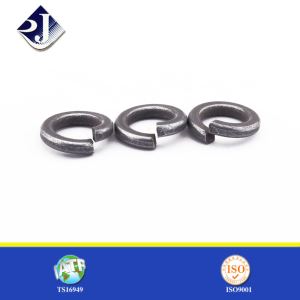

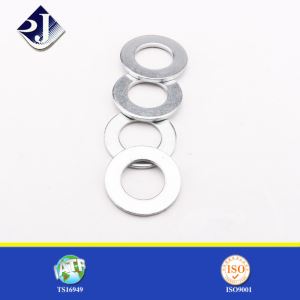
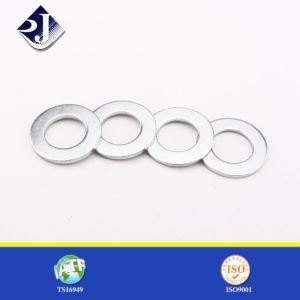
The company's main washer is metal flat washer and spring washer, with more than 20 years of production experience, you can customize various types of washer products.
The function of the washer is basically the same, but the function of the flat washer is more focused on increasing the fastening contact area, while the function of the spring washer is to prevent loosening. Therefore, there are some differences in the use of the two. Due to the material and process limitations of some bolts and other fasteners, where the supporting surface is not large, it is necessary to reduce the compressive stress of the bearing surface and protect the surface of the connected parts, so flat washer must be used. But in some cases, such as the bolts connecting the motor and the base, the motor vibration will make the nuts loose, so the spring gasket must be used on the fasteners of these vibration equipment.
Why Choose Us
Rich experience
Dedicated to strict quality control and attentive customer service, our experienced staff is always available to discuss your requirements and ensure complete customer satisfaction.
Advanced equipment
We take great measures to ensure that we work with the industry’s highest quality equipment and that our equipment is regularly and meticulously maintained.
High quality products
We always put customer needs and expectations in the first place, refine on, continuous improvement, to seek every opportunity to do better, to provide customers with their expectations of quality products, to provide customers with the most satisfactory service at anytime.
Professional service
We can accept factory inspection and goods inspection at any time. Technical discussion, research and development of new products, and complete after-sales service.
Different Types Of Washers

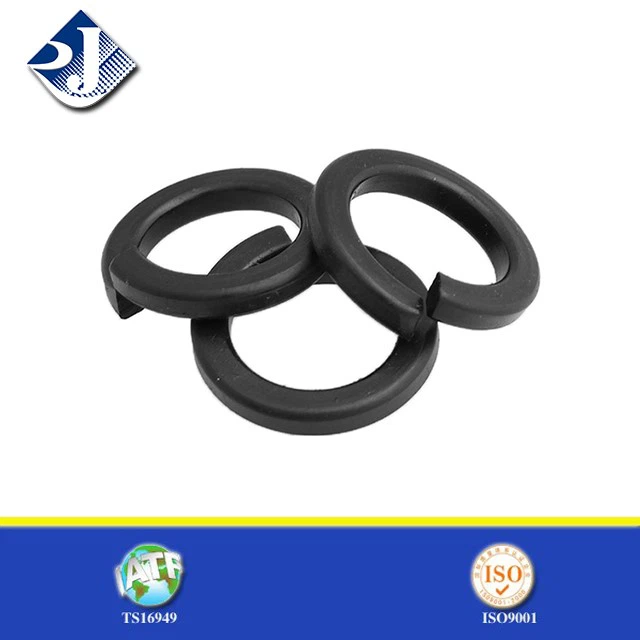


Torque washer
The principal uses for these washers are in the woodworking industry. When a nut is tightened, the outside prongs of the washers feature square holes that prevent the accompanying bolt from spinning.
Flat washer
Flat washers have a hole in the center and are flat or disc-shaped. They are ideal for small head screws because they spread the weight across a wider surface.
Fender washer
Fender washers are bigger and have a tiny hole in the center. They can spread out the load across a broader region. These washers are primarily used in sheet metal manufacturing, automotive fenders, and plumbing industries.
Finishing or countersunk washer
Countersunk washers in this category often create a flush finish upon securing with a flat-head countersunk screw. This ability to catch countersunk fasteners is due to its sunken top.
Shoulder washer
Shoulder washer fasteners in this category come in various materials, including PTFE, fiberglass, metal, phenolic, and nylon. These shoulder-like shaped washers often serve as insulators for screws and wires.
C-washer
A C-washer resembles a flat washer, but the primary difference is the hole cut from its center to form a C-shape. One primary advantage of this type of washer is that it is possible to adjust, remove or modify it without removing the fastener.
Spring washers
For machinery that vibrates vigorously while operating, spring washers are ideal. They move with vibrations, thus preventing them from being loose or unfastened because of their axial flexibility, consequently increasing the joint' s flexibility. There are different types of spring washers.
Belleville or conical washer
These washers, often called conical spring washers, are employed to maintain tension during the assembly' s thermal expansion and contraction. They can support large weights while deflecting only slightly.
Dome spring washer
A dome washer is renowned for having a large load capacity with minimal deflection. They also absorb excessive vibrations and flatten the surface.
Wave spring washer
Wave spring washers are curved in two directions and are typically employed as cushions or spacers. They can support a moderate amount of weight and guard against excessive wear on the surface.
Crescent spring washer
The crescent spring washer, also called curved spring washer, has a somewhat curved appearance that gives them a lighter pressure while maintaining flexibility. They have an extensive deflection range and can withstand extremely light loads.
Lock washers
Lock washers are designed to help prevent the screws and nuts from rotating toward their loosening position. Consequently, this preserves them even during intense vibrations produced by the machine or equipment' s operation. In other words, they hold the fasteners that tend to loosen due to friction in place. The different types of lock washers include:
Materials Used To Make A Washer
Rubber and nylon washers
It' s good knowledge that rubber washers are made of synthetic rubber nitrile. Regarding sealing washers, this material and nylon have some similar qualities. These washers can effectively seal uneven surfaces since rubber is more flexible and pliable. However, rubber and nylon have the disadvantage of quickly distorting under strong compression forces, reducing the washer' s life span.
Metal washers
There are different types of metals and grades of metals used in making washers due to the different beneficial properties of these metal washers. Metal washers often form a powerful seal, preventing leaks and drips, especially for metal washers made from stainless steel, due to their corrosion resistance.
Plastic washers
Compared to metals, plastic washers made through injection molding are more affordable. Consider employing a plastic washer if your application doesn' t need excessive strength. Also, use a plastic washer when electrical isolation and vibration resistance are required.
Purpose Of A Washer
Spacing and alignment
Washers can be utilized as spacers. When we insert a threaded fastener into an object longer than its depth, the fastener protrudes from the rear of the object. For instance, when one tries to insert a 3-inch-deep fastener in a 2-inch-deep object, the 1-inch fastener sticks out the back of the object.
Load sistribution
Washers assist in spreading the load more equally across a broader surface. The risk of material deformation, damage, or failure is decreased by washers because they disperse the force produced by a nut or bolt. For instance, driving a screw into a softer material could result in cracks appearing on its surface. However, with washers, there is minimal damage tendency.
Seal/liquid protection
Washers in this category stop water and other liquids from entering and exiting. Seal washes are frequently applied in water pipelines and connectors to make a waterproof seal. Liquid-sealing washers are constructed of a flexible material, and this material choice ensures they press completely against the object' s surface.
Vibration absorption
Vibration absorption is a feature of some washer types. Washers in this category are mainly not metals. Instead, softer materials like plastic, rubber, or urethane are used to create them. These softer materials are better at absorbing vibrations than harder elements like metal.
Damage prevention
The nut or bolt head and the surface it is fastened to are separated by washers, which serve as a protective barrier. This preserves the material' s integrity and maintains the connected surfaces' visual appeal by preventing marring, scratches, dents, and other damages.
Corrosion prevention
Washer fasteners, especially those made from corrosion-resistant materials, offer additional protection against corrosion and rust. This is crucial in locations where prolonged exposure to moisture, strong chemicals, or other elements can deteriorate the fastening system.
What Are The Shapes Of Washers
1. Spherical shape
As their intended purpose, these washers have a precise, parallel plane between the bolt head and the nut face. Spherical washers automatically correct and balance the angular misalignment between the planes while guarding against bolt bending. Examples include fender, slotted, countersunk, and flat washers.
2. Square shape
Compared to round washers, square washers have a higher surface area, which improves torque distribution. They help in corrosion resistance and rotation prevention.
Shoulder shape
These washers are also known as insulator washers. They are non-metallic, often made of nylon. Shoulder washes typically come with a long or short barrel. They protect fasteners from moisture and dirt.
Wave shape
Usually made from metals, wave washers are often curved in two directions. They function primarily as spacers or cushions; when compressed, they help sustain loads and maintain fastener tension. An example is the wave washer.
C-shaped
Designed to slide in and out of position on a bolt without necessarily

Reasons Why Washers Are Used with Fasteners
The primary purpose of most washers is to evenly distribute the load of the threaded fasteners they are used with. Threaded fasteners exert pressure on the material that drives them. For example, driving screws into wood may cause the surface of the wood to crack. Washers reduce the risk of this type of damage by evenly distributing the load of the fastener across the surface of the material. Not all materials require the use of washers. But for wood and other relatively soft materials, washers can be used to prevent stress-related damage when threaded fasteners are driven into the material.
Washers can also be used as spacers. Why do I need a spacer when driving a threaded fastener into an object? If the threaded fastener is longer than the depth of the object, you won't be able to screw it all the way into the object - at least some of the fastener will stick out of the back of the object. Driving a 4-inch screw into an object that is 3 inches deep will cause the tip of the screw to protrude 1 inch from the back of the object. An easy way to solve this problem is to use washers. Putting a washer through the threaded fastener before driving it into the object creates padding so the fastener doesn't go in too deep.
Certain types of washers are designed to absorb vibration. They are called vibration damping or isolation washers and are usually not made of metal. Instead, they are made of softer materials such as plastic, rubber, or polyurethane. Softer materials such as these absorb vibration more effectively than harder materials, including metals. If you use threaded fasteners to connect two objects and one of the objects vibrates violently, using a vibration-absorbing washer can protect the other object from damage.
Other types of gaskets keep water and liquids out. They are commonly used on water pipes and joints to create a watertight seal. Like vibration-damping washers, liquid sealing washers are made of soft material that fully presses against the surface.
The Importance of Using Washers
Washers are often mistaken for simply cheap metal discs, used to keep fasteners tight. What many people don' t understand is that they are a critical fastener component and have been designed to perform unique functions that ensure the safety and longevity of the product being put together. Choosing not to use a washer with your fasteners is almost always guaranteed to reduce the lifespan and reliability of the join as well as increase the risk of long-term damage to the product or equipment being fastened.
Washers come in a variety of sizes, finishes, and materials, and it' s estimated that billions are used each year for assembly applications and maintenance. The two main purposes of standard washers, such as aluminum flat washers, are to distribute the pressure or clamp load evenly so that the surface beneath the fastener isn' t damaged, and to make sure that the nut is pressed against a smooth surface, keeping the fastener from loosening and insulating it against moisture or electricity.
Once you' ve made the smart decision to use washers with your fasteners, you then need to determine what you hope to gain from their use, allowing you to select the best washer for the specific application. It' s important to remember that the size, thickness, and strength of a washer will influence the length, diameter, and capability of the fastener. If your assembly needs to be as tight as possible, you would need a thicker washer or even more than one, to achieve this result. To reduce leakage, a smaller, high-quality washer would ensure that the space between the fastener is limited and better insulated. In most cases, it' s recommended that you consult with a reputable vendor on which types of washers are best for specific applications.
Taking care of your washers is also important if you want to get the most out of your fastener and the join. In many cases, it might be necessary to grease the washer with a quality lubricant . This simple task can reduce the risk of corrosion, make it easier to keep the fastener in place and ensure that the join is completely insulated against leakage.
Our Factory
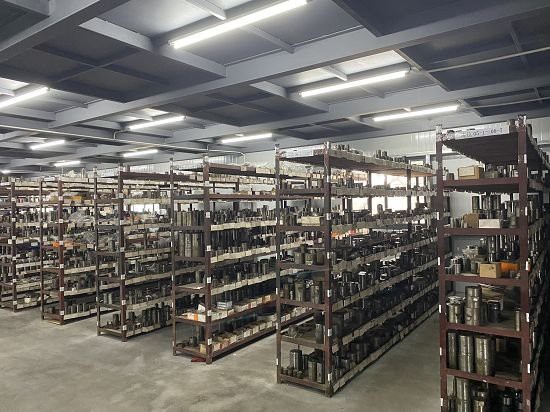
Shanghai Jinrui Norm Parts Supplies Co., Ltd. was built in 2001 which located in Baoshan District adjacent to the Bao Steel Group. Shanghai Jinrui is a fastener enterprise who owns a set of R & D, design, production and sales of high quality. Shanghai Jinrui owns total assets of RMB 50 million with area of 5000㎡. The business covers more than 35 countries. Now three branches of Shanghai Jinrui are Shanghai Xingrui Bolt Factory, Shanghai Xingrui Wire Steel Factory, and Shanghai Xingrui Hot heading Factory.




Certifications


