


In mechanical design and assembly, threads serve as the core structure of fasteners. Proper thread selection directly determines the reliability and safety of connections. For a given nominal diameter, threads fall into two categories: coarse‑pitch and fine‑pitch threads. They differ significantly in structural features and applicable working conditions, and rational selection is critical to ensure engineering safety.
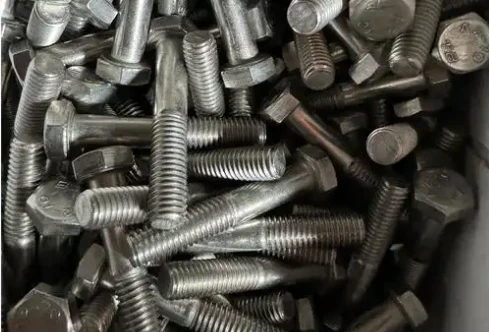
Coarse‑pitch threads act as the default industrial standard. Characterized by large pitch and deep thread profile, they feature fast assembly and disassembly, low processing costs and complete availability of matching standard components. They perform well for general connections and positions requiring frequent maintenance and disassembly. Nevertheless, the large pitch brings a relatively large thread lead angle, resulting in poor self‑locking performance. Under heavy‑vibration conditions, auxiliary anti‑loosening measures such as lock washers are generally required.
In contrast, fine‑pitch threads are developed for special working conditions. With the same nominal diameter, fine‑pitch threads adopt smaller pitch and shallower thread profile. This design delivers three major advantages. First, the smaller thread lead angle provides excellent self‑locking capacity, resisting loosening under vibration and alternating loads. Second, the shallower thread cuts less material from the base part, minimizing strength reduction of thin‑wall components and hollow tubular parts. Third, more threads per unit length deliver better sealing performance. Moreover, its small axial displacement per revolution makes it suitable for hydraulic pipelines and instrument structures requiring precise fine‑tuning. On the downside, fine‑pitch threads demand higher machining accuracy, lower assembly efficiency, and are prone to thread wear after repeated disassembly and reassembly.
For practical selection, engineers shall follow the principle: coarse‑pitch threads for general purposes, fine‑pitch threads for special conditions. Coarse‑pitch threads are preferred for ordinary mechanical connections, heavy‑impact loads and scenarios requiring rapid assembly. Fine‑pitch threads should be adopted for high‑speed rotating equipment, heavy‑vibration environments, thin‑wall parts, as well as assemblies with strict sealing requirements or precise fine‑tuning demands.
It shall be emphasized that coarse‑pitch and fine‑pitch threads must never be used interchangeably. Even with identical nominal diameter, threads with different pitches cannot mate. Therefore, pitch parameters must be clearly specified during procurement, drawing marking and warehouse management. For instance, M10 refers to coarse‑pitch thread by default, while M10×1.25 denotes fine‑pitch thread. Clear marking prevents assembly failure or workpiece scrap caused by misapplication.


