


The term "high strength" for high-strength bolts refers to the superior mechanical load-bearing properties of bolt materials after heat treatment, which are mainly reflected in excellent tensile strength, yield strength and shear resistance. High-strength bolts are primarily used for structural connections of steel structures and mechanical equipment under heavy loads, frequent vibration and critical stress conditions, so as to withstand large loads and ensure the stability and safety of structural connections.
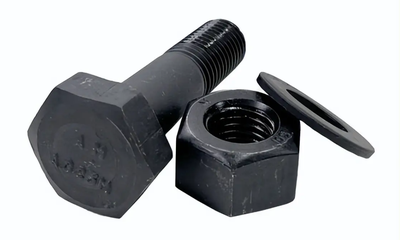
High-strength bolts are generally manufactured from high-quality medium-carbon alloy steel and structural alloy steel. Through quenching, tempering and other thermal treatment processes, the overall strength, hardness and toughness of bolts are significantly improved. All finished products undergo strict mechanical testing and quality control, and all mechanical performance indicators meet the requirements of engineering design and long-term service.
To correctly understand the "high-strength" characteristics of high-strength bolts, the following core key points should be mastered:
1. Tensile Strength: It refers to the maximum ultimate stress that a bolt can withstand under axial tension. Bolt strength grades (Grade 8.8, Grade 10.9, Grade 12.9) are classified mainly according to tensile strength. The higher the grade value, the stronger the ultimate tensile capacity of the bolt.
2. Shear Strength: It refers to the maximum stress that a bolt can resist shear deformation and fracture under transverse shear force. The shear strength of a bolt is proportional to its tensile strength rather than being numerically equal to it. With excellent material properties, high-strength bolts can effectively resist shear damage and are suitable for connection joints bearing large shear forces.
3. Installation Preload: The core difference between high-strength bolts and ordinary bolts is that standard preload must be applied during installation. Accurate preload generates friction on the contact surface of connected components, and the load is transferred through friction instead of relying solely on the bolt shank, which fundamentally improves the stiffness, fatigue resistance and reliability of the connection. The preload shall be accurately calculated and controlled in accordance with design standards, bolt specifications and strength grades.
In addition, a comprehensive understanding of the application characteristics of high-strength bolts includes the following key contents:
1. Strength Grade: Common industrial strength grades include Grade 8.8, Grade 10.9 and Grade 12.9. These grades represent standardized mechanical performance parameters, corresponding to fixed indicators of tensile strength, yield strength and shear strength. Different strength grades adapt to engineering projects with different load levels and importance, and shall be selected and matched according to actual demands.
2. Safety Factor: A reasonable safety factor must be considered in bolt design and selection. The safety factor is the ratio of the ultimate bearing capacity of the bolt to the actual working load. In conventional engineering, the safety factor shall be greater than 1 to reserve a safety margin and prevent bolt failure such as fracture and loosening caused by overload, vibration and working condition fluctuations.
3. Application Limitations: High-strength bolts are not applicable to all working conditions. Conventional high-strength bolts are not resistant to strong acid and alkali corrosion or ultra-high temperature environments. For working conditions with high temperature, high humidity and strong corrosion, special high-strength bolts with high temperature resistance and corrosion resistance shall be selected, and corresponding surface anti-corrosion and protection measures shall be equipped to avoid performance degradation and potential connection safety hazards.
4. Installation and Tightening Requirements: High-strength bolts have strict requirements on installation processes and are prohibited from arbitrary manual tightening. Professional tools such as torque wrenches and hydraulic torque wrenches must be used during construction to accurately control the tightening torque, ensure uniform and standard bolt preload, and avoid connection loosening, bolt fatigue fracture and structural deformation caused by insufficient or excessive tightening.
In conclusion, the "high strength" of high-strength bolts is reflected not only in the excellent tensile and shear mechanical properties of the material itself, but also in the standardized system of type selection, pre-tightening installation and working condition adaptation. Only by strictly following relevant specifications, conducting reasonable type selection, standardized installation and scientific application can the load-bearing advantages of high-strength bolts be fully exerted, so as to ensure the long-term stability and safe operation of various steel structures and mechanical equipment.


