


The preload of a threaded fastener connection refers to the pre-applied force exerted on the threaded fastener connection before it bears the working load. A suitable preload is an important prerequisite for enhancing the reliability and tightness of the fastener connection. If the preload fails to meet the specified requirements, gaps or relative slip will occur between the connected parts after being loaded, resulting in loosening of the fasteners and even making the entire machine unable to work normally; if the preload is too large, it will cause artificial damage to the parts. For example, at the place sealed with an O-ring, excessive preload will crush the O-ring and lead to seal failure.
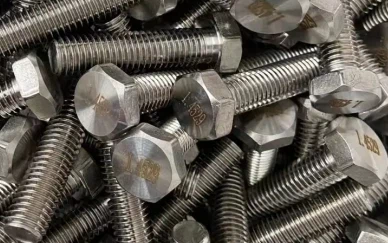
Unsuitable preload in threaded fastener connections will bring the following consequences:
1. Static Failure of Threaded Fastener Connection Parts
If the threaded fastener is tightened too much, that is, the preload is too large, it will cause artificial damage to the parts: the bolt may be broken, the connected parts may be crushed, seized, twisted or broken, and the thread profile may also be sheared, resulting in thread stripping.
2. Slip, Separation of Connected Parts or Loosening of Fasteners
For ordinary bolt connections bearing transverse loads, the preload generates positive pressure between the connected parts, which resists external loads by virtue of friction. Therefore, the magnitude of the preload determines its bearing capacity. If the preload is insufficient, the connected parts will slip, which will further lead to misalignment, skew, and wrinkling of the connected parts, and the bolt may also be sheared. For bolt connections bearing axial loads, the preload generates a pressing force on the joint surface, and the residual preload after being subjected to external loads is the pressing force during work on the joint surface. If the preload is insufficient, it will lead to loosening of the joint surface and even the serious consequence of separation of the two connected parts; at the same time, insufficient preload will also cause strong transverse vibration, leading to phenomena such as nut loosening.
3. Bolt Fatigue Failure
In most cases, unsuitable preload will cause the bolt to fail due to fatigue. Although reducing the preload can reduce the average value of the cyclically changing total load on the bolt, it will increase the load amplitude. The overall effect is often to shorten the fatigue life of the bolt and cause fatigue failure.
Therefore, in the assembly process, the range of preload must be clarified. It is necessary to comprehensively consider factors such as the importance of the connected parts, force conditions, movement mode, structural characteristics, thread specifications and grades, material of the connected parts, and the purpose of the connection to determine a scientific and reasonable preload torque range; during assembly, it is necessary to strictly abide by the torque requirements specified in the process. Only in this way can the reliability of the threaded connection and the fatigue resistance of the connected parts be truly improved.


