


Hex nuts may look simple, but they play a crucial role in holding our world together. From bridges and buildings to machinery and vehicles, these six-sided fasteners are essential in providing secure, durable joints. Whether you're an engineer, contractor, or just curious about hardware components, understanding the function and versatility of hex nuts is key to appreciating how structures stay intact under stress.
What is a Hex Nut?
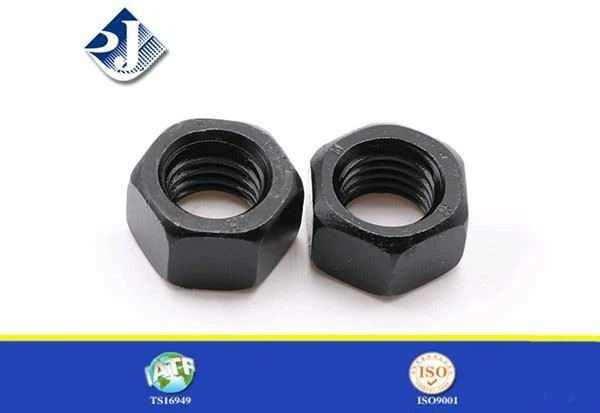
A hex nut is a six-sided metal fastener with a precision-threaded center hole. By tightening onto bolts or studs, it generates clamping force. With over 250 billion consumed globally each year, it serves as a fundamental component in machinery, construction, and automotive manufacturing.
Four Unbeatable Strengths
Multi-angle torque: Six flat sides grip tools at any orientation
Anti-slip mastery: Corners lock onto tools, boosting tightening efficiency by 50%
Universal adaptability: Fits everything from eyeglasses (M1.6) to tunnel borers (M100)
Adjustable strength: Grades 4 to 12 cover all industrial needs
Maintenance-free: Once properly installed, no re-tightening required
How It Works in 3 Steps
Thread engagement: Internal threads mesh with bolt's external threads
Pressure generation: Rotation creates tensile force → fuses materials into one
Elastic locking: Material deformation forms permanent preload → resists vibration
Common Types Simplified
Strength tiers:
Household (Grade 4) · Automotive (Grade 8) · Bridge (Grade 12)
Corrosion protection:
Zinc-plated (3-year rustproof) · Hot-dip galvanized (15-year) · Stainless steel (lifelong)
Special functions:
Nylon-insert (anti-vibration) · Flanged (increased bearing surface) · Cap style (dust/waterproof)
Four Essential Applications
① Skyscraper Steel Skeletons
Steel beam connections in high-rises:
Grade 8.8 hot-dip nuts withstand over 20 tons per joint
② Automotive Wheel Security
Tire fastening systems:
Conical self-locking nuts endure 5× impact forces during emergency braking
③ High-Speed Rail Track Locks
Rail fastening components:
Grade 10.9 anti-loosening nuts survive 350km/h vibrations for a decade
④ Wind Turbine Spine Fasteners
Tower section connections:
Stainless steel nuts resist salt spray, 2000+ nuts per turbine
Four-Step Selection Guide
Step 1: Match Strength Requirements
Bookshelf assembly → Grade 4
Automotive repair → Grade 8
Bridge cables → Grade 12
Step 2: Evaluate Environment
Indoor electronics → Zinc-plated
Outdoor railings → Hot-dip galvanized
Marine equipment → Stainless steel
Step 3: Special Features
Vibrating equipment (treadmills) → Nylon-insert
Pipe sealing → Flanged
Decorative outdoor → Cap style
Step 4: Size Properly
Bolt diameter = M value (e.g.: M8 bolt → M8 nut)
Wrench size = Nut width across flats (e.g.: M10 nut → 16mm wrench)
Selection Mantra:
Match strength grades,
Choose corrosion coats,
Lock vibration in place,
Measure to fit space!
Critical Knowledge
Installation rule: Bolts must protrude 2-3 threads after tightening (GB/T 6171 standard)
Authenticity check: Genuine Grade 8 nuts feature stamped "8" (counterfeits use laser marks)
Industry insight: Hong Kong-Zhuhai-Macao Bridge used 6 million Grade 10.9 nuts, enduring 65m/s typhoon winds
Standards: ISO 4032 · GB/T 6170 · DIN 934
Conclusion
Hex nuts are more than just a basic fastener-they are a foundational element in nearly every major industry, known for their reliability, ease of use, and adaptability. Whether you're selecting hardware for construction, machinery, or high-performance equipment, choosing the right hex nut is critical to ensuring long-term strength and stability.
At Jinrui, we specialize in manufacturing high-quality hex nuts that meet a variety of industrial standards and performance needs. If you're looking for reliable fastening solutions backed by professional service and customization options, we're here to help.
Contact Jinrui today to find the right hex nuts for your next project.


