


At present, most industrial bolt tightening operations require precise force control, namely the torque control process. This process completes fastening by setting a fixed torque value or adopting the dual control mode of "torque + angle", so as to obtain stable and qualified axial clamping force and ensure the assembly accuracy and long-term operational reliability of threaded connections.
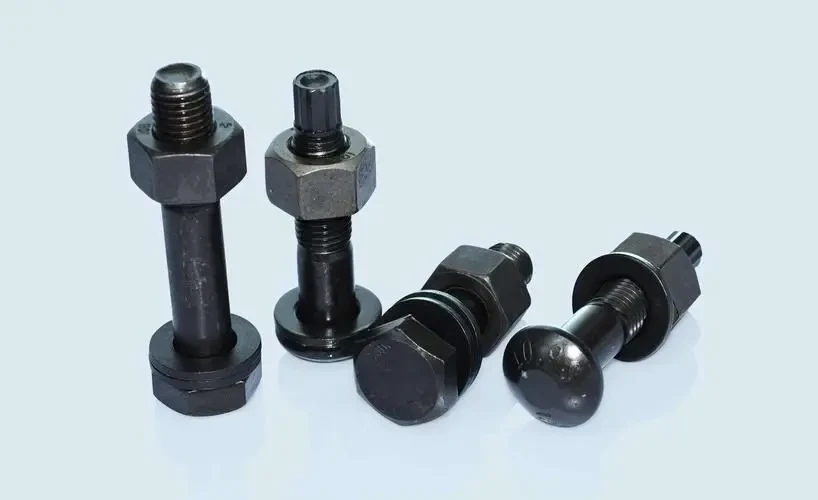
Bolt tightening is a complex mechanical coupling process. The tightening quality is mainly affected by four core factors: torque value, axial preload, contact surface friction coefficient and material hardness. Only by comprehensively controlling the above parameters can safe, stable and qualified bolt tightening results be achieved. Traditional torque wrenches can meet the torque control requirements of conventional working conditions and adapt to ordinary assembly standards. However, for key threaded connections requiring high precision and high safety, manual torque wrenches alone cannot meet the requirements.
The deviations in torque control accuracy mainly come from two aspects: meshing friction between thread pairs and contact friction between the bolt head and the workpiece surface. The friction loss during actual tightening is extremely high. Under normal working conditions, only about 10% of the input torque can be effectively converted into the effective clamping preload of the bolt, while the rest is completely consumed by end face friction and thread friction. This easily causes a false tightening problem where the torque reaches the standard but the preload is insufficient.
To improve the tightening accuracy of high-end assembly, angle-controlled tightening technology is widely adopted in the industry, especially in the highly standardized and precision-oriented automobile manufacturing industry, which maximizes the tightening performance of bolts. The tightening angle refers to the rotational angle difference of the bolt from the initial fitting state with the workpiece to the preset fastening standard.
The required tightening angle varies significantly with the material hardness of fasteners and connected parts. High-hardness materials such as carbon steel feature high rigidity and small deformation, requiring a smaller tightening angle. Low-hardness materials such as wood and soft profiles have large compression deformation and high friction loss, requiring a larger tightening angle with a relatively lower final effective clamping force.
The torque-angle dual control process firstly tightens the bolt to the preset starting torque through torque control to eliminate workpiece gaps and complete preliminary fitting. The final tightening is then finished under the closed-loop dual control of torque and rotation angle until the preset torque and angle values are reached. This process effectively prevents the bolt from over-stretching into the plastic deformation range, avoids fatigue failure and potential safety hazards caused by stress exceeding the yield limit, significantly reduces preload attenuation, and ensures the long-term stability of connecting structures.
Special note: Bolts tightened by the angle control process have produced micro plastic deformation internally and are strictly prohibited from secondary reuse.
Current mainstream bolt tightening processes are divided into two categories: elastic range tightening and plastic range tightening. The torque tightening method belongs to elastic tightening, while the angle tightening method and yield-point tightening method belong to plastic tightening.
1. Torque Tightening Method
The core principle of the torque tightening method is that under stable working conditions and consistent part quality, the input torque has a linear corresponding relationship with the axial preload of the bolt. The clamping preload of connected parts is indirectly controlled by setting a fixed tightening torque. With simple operation and intuitive effect, this process is the most widely used basic fastening method at present.
In terms of mechanical loss ratio, approximately 50% of the torque is consumed by bolt head end face friction, 40% by thread pair friction, and only 10% is effectively converted into axial preload. Affected by fluctuations in friction coefficient, workpiece flatness, thread accuracy and environmental factors, the single torque control method features low accuracy in preload control.
In addition, there is a common hidden assembly hazard in the industry: although the displayed torque value reaches the standard during tightening, the bolt head is not completely attached to the workpiece with tiny invisible gaps remaining on the contact surface. In this case, the torque reading is qualified, but the actual preload is extremely low or even zero, which easily leads to loose connections and equipment failures. High-precision torque wrenches can effectively avoid such problems, accurately control torque output and guarantee basic assembly quality.
2. Angle Tightening Method
To solve the low accuracy defect of the single torque tightening method, the angle tightening process has been gradually popularized in the industry. Its principle is that the bolt tightening rotation angle is positively correlated with the sum of bolt elongation and workpiece compression deformation. The axial preload can be stably controlled by precisely adjusting the rotation angle.
The construction procedure is as follows: firstly, tighten the bolt to the standard starting torque to bring the bolt close to the elastic limit state; then rotate it by a fixed angle to stretch the bolt moderately into the plastic range for final fastening. The essence of the angle tightening method is to lock the axial preload by controlling the bolt elongation. In the elastic range, elongation is proportional to preload. After entering the plastic range, although the linear relationship disappears, the bolt axial preload can remain stable near the yield load within a reasonable range.
The biggest advantage of this process is that it eliminates errors caused by friction coefficient differences. For bolts with different friction coefficients but consistent specifications and strength, the final preload is basically uniform despite different final tightening torque values. It greatly improves assembly consistency and material utilization, making it suitable for high-precision assembly scenarios. High-precision angle torque wrenches perfectly match the process requirements and realize accurate dual control of torque and angle.
3. Yield-Point Tightening Method
The theoretical goal of the yield-point tightening method is to tighten the bolt precisely to the state just exceeding the yield limit, so as to maximize the utilization of bolt material strength. During operation, the bolt is firstly tightened to the specified starting torque. The equipment monitors the slope change of the tightening curve in real time. When the slope drops below the set threshold, the bolt is judged to have reached the yield point, and the tool stops operation immediately.
This process can tighten bolts with different friction coefficients and under different working conditions to their critical yield state, maximizing the structural strength potential of fasteners and achieving optimal assembly accuracy and structural stability. However, it has extremely high requirements for working condition stability, bolt material consistency and equipment precision, with low anti-interference performance and high cost of supporting high-end tightening equipment.
High-quality torque wrench series products can meet high-precision process standards with excellent cost performance, balancing construction accuracy and procurement cost.


