


In the field of fastener connections, apart from auxiliary fasteners such as retaining rings and pins, the commonly used mainstream connection methods mainly include three types: riveting, threaded connection, and welding. Each of them has its unique characteristics. So, which connection method is more perfect?
I. Differences in Mechanical Properties
Riveting: During the riveting process, fasteners exhibit good shear resistance performance. However, their ability to withstand tensile force is relatively poor. Based on this, many riveted fasteners are installed by means of pulling them to break.
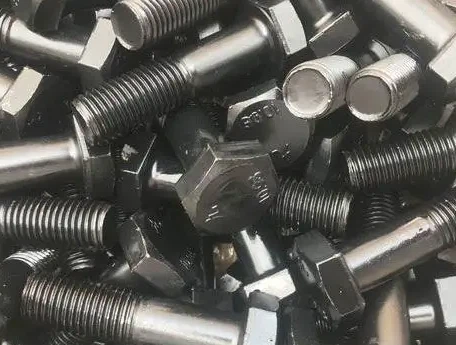
Threaded Connection: As a universal connection method, threaded connection has relatively balanced performance in withstanding shear force and tensile force, and it can be adapted to the vast majority of working environments.
Welding: The welding connection method is the most secure, but it shows weakness when it comes to withstanding transverse tearing force.
II. Convenience and Reusability
Threaded Connection: Considering from the perspective of convenience, threaded connection has significant advantages. It is the only one among the three connection methods that can be disassembled and reused at any time.
Riveting and Welding: In contrast, riveting and welding are one-time connections. Once the installation is completed, the fasteners cannot be reused.
III. Ranking of Perfection
Analyzing from the aspect of perfection, threaded connection ranks the best among the three due to its good mechanical properties and convenience; riveting comes second; and welding ranks the last.
IV. Difficulty of Quality Control
Threaded Connection: In terms of quality control, threaded connection is very convenient, which makes it easy to conduct quality inspection and verification at any time.
Welding: The difficulty of quality control for welding is relatively higher, but it is still better than riveting.
Riveting: The riveting method is the most inconvenient in terms of controlling the stability of quality.
V. Comparison of Usage Cost
Welding: When it comes to usage costs, the situation is reversed. The cost of welded fasteners is the lowest among the three.
Riveting: The cost of riveted fasteners is slightly higher than that of welding.
Threaded Connection: The cost of threaded connection ranks the highest.
VI. Lightweight Effect
Riveting: In terms of the lightweight effect, riveting performs the best, which can effectively reduce the overall weight.
Welding: Welding comes second.
Threaded Connection: Due to its own structure and other factors, the weight of threaded connection is relatively large.
In conclusion, each of these three connection methods has its own advantages and disadvantages. It is impossible to simply determine which one is better. The key lies in choosing the most suitable method according to the specific installation environment.
VII. Application Examples in Different Industries
Aircraft Manufacturing: Aircraft manufacturing involves the combination of various different materials, so the welding method is not suitable. At the same time, aircraft have high requirements for lightweight, so riveting accounts for a relatively large proportion of applications in aircraft manufacturing.
Automobile Manufacturing: In the field of automobile manufacturing, threaded connection is more common.
Other Fields: Riveting is often used in products such as sheet metal, computer electronics, and electrical appliances; threaded connection is widely applied in mechanical equipment, bridges, and other fields. Many people may wonder why bridges do not use welding as much as possible since welding is so secure. This is because the stability of welding quality is difficult to control, and its fatigue resistance is hard to predict. Threaded connection, on the other hand, can ensure safety and reliability, and relevant application data can be monitored at any time. It is also relatively easy to replace when necessary.
In terms of the simplicity of installation, threaded connection is the most convenient. As long as the installation conditions meet the operation requirements, its quality is the most reliable. For some computer motherboards or other sheet metal cases, riveting is mostly used for installation, which is due to the requirements of the installation environment. Since the sheet metal is thin, it is difficult to form an effective lock with threaded connection, and it seems a bit of a waste. Moreover, welding is even more unfeasible. Welding will produce weld spots, which not only affect the appearance but also the thin sheet metal is difficult to withstand heating. If not careful, holes will be melted on it.
Although the bolt connection is regarded as an ideal connection method, it is not suitable for all environments. As mentioned before, sheet metal is not suitable for threaded connection, and threaded connection is not applicable in some common environments either. We know that the thread is in the shape of a vertical straight rod. If the hole position tolerance is inaccurate or the holes are not concentric, it will be very difficult for the threaded rod to pass through the hole, while welding does not have such a problem.
In short, no matter which connection method it is, it cannot be simply classified as good or bad. Instead, a reasonable choice should be made according to the specific application environment.


