


The primary task before using bolts is to design their strength and material properties based on the specific usage environment. Normally, bolts can be reused after installation. However, in reality, when a bolt is repeatedly used, its strength will decrease, a phenomenon known as bolt torque decay. This gradual decrease in strength is particularly common in the use of automotive bolts. We have been tracking the usage of automotive bolts for a long time and have conducted detailed analysis and recording of the causes and processes of strength attenuation.
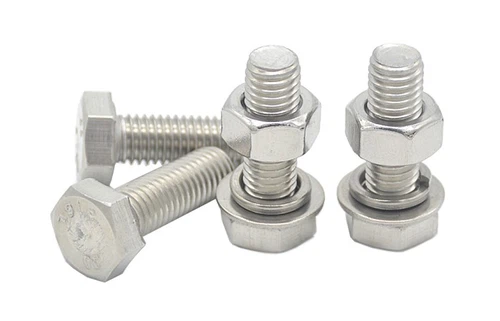
So, can we solve the problem of bolt strength attenuation? Through experiments, we have found that we can indeed further optimize the material properties of bolts through heat treatment. Accurately calculating the maximum friction coefficient and thread engagement length, and controlling the heat treatment time and temperature within a certain range, can effectively solve the problem of bolt torque attenuation. Generally speaking, after two to three years of use, we will find that the attenuation amplitude of car bolts can reach 20%. For the strength design of bolts, if the fluctuation range of torque parameters exceeds 25%, the bolt is considered a defective product and cannot be put into use. The main reasons for the decrease in bolt strength are as follows: firstly, the thread locking length is unreasonable, either too long or too short; Secondly, the diameter of the bolt head is too small, and the contact area has not reached a reasonable range, resulting in an unstable friction coefficient; Thirdly, the material properties of the bolt itself have changed beyond the estimated range; The fourth issue is the unreasonable design of accessories.
We can find corresponding corrective measures to address these issues. If it is due to the length of the thread, the solution is relatively simple, just replace the thread with a suitable length. But sometimes, the standard range of bolts is difficult to fully match the design parameters. To save procurement time and costs, people may overlook the issue of thread length, thinking that being longer or shorter is not a big deal. In fact, we should fully consider the importance of quality. We would rather increase the cost than strictly produce according to the design drawings, and cannot use standard parts to replace them at will.
If the friction strength is insufficient due to the small diameter of the bolt head, a redesign of the drawing is required. Moreover, it must undergo extensive experimental verification to ensure accuracy before it can be used with confidence. The diameter of the bolt head is closely related to the installation environment. If the standard bolt cannot be inserted into the corresponding hole, the relevant dimensions of the bolt can only be redesigned. Once the size and performance change, it is necessary to file a record, detailing the reasons for the size change and the time of first use. For such bolts, relevant personnel should have a clear understanding, track and observe their changes at any time, and adjust the replacement time of the bolts accordingly, which is usually shorter than the replacement time in conventional environments. In addition, the variation of friction coefficient is not only related to the size of the contact area, but also to the force of thread locking and the type and standard of nut fit. To compensate for the low friction coefficient of bolts, we can improve the nut fit, such as using locking nuts to match with these types of bolts.
If the material properties of the bolt are unstable, the solution is relatively clear, but it requires an increase in cost. Of course, every enterprise has its own approach, and Jinrui generally chooses to increase costs rather than face these unstable factors in the later stage. Why can increasing costs solve the problem of unstable bolt material performance? We can choose bolts with higher material grades. If conditions permit, if the original designed bolt is grade 6.8 and it is found that the performance of this grade bolt is unstable, then it can be replaced with a grade 8.8 bolt. Although the price of grade 8.8 bolt material is slightly higher than grade 6.8, the cost of use and maintenance will be significantly reduced. After comprehensive calculation, the final application cost actually does not increase much.
The last reason, which is the unreasonable design of the accessories, is actually not directly related to the bolts themselves. As professionals in the bolt industry, it is difficult to provide specific recommendations in this regard. This involves the improvement of basic level. Only when the accuracy and design level of each link are improved as a whole, can the basic industry of the entire society make significant progress.
So, whether it's a small bolt or a large product like a car, we need to work together to constantly improve its quality to a higher level.


