


With the epidemic raging in Southeast Asia and manufacturing orders returning to China, what are the Inspirations of fastener enterprises?
Delta virus, a new crown variant virus, has swept the world. The new infection cases in many countries in Southeast Asia are still reaching a new high, becoming one of the most serious epidemic areas in the world. Southeast Asia, with low vaccination rate and inadequate epidemic control measures, has a great impact on the global supply chain. Garment, textile, semiconductor and other manufacturing industries are facing the risk of interruption, and orders continue to flow out, which has a great impact on China's economy and the global supply chain.
Indonesia extended five restrictions and small and micro enterprises closed down one after another
As the world's fourth largest exporter and the largest economy in Southeast Asia, Indonesia suffered the second major outbreak of the epidemic this summer. Novel coronavirus pneumonia confirmed in Indonesia increased to 3908247 on the 18 th day, 15768 new confirmed cases in Indonesia and 121141 cases in total. The Indonesian government announced the fifth extension of emergency restrictions, which will be implemented until the 23rd of this month. According to the data of the Indonesian Association of small, medium and micro enterprises, the epidemic led to the closure of more than 30 million small, medium and micro enterprises. The largest cross-border fast fashion giant, Chinese brand sheen, stopped operating in Indonesia on July 29.

Malaysian action control, semiconductor manufacturing tight
The latest outbreak of the epidemic in Malaysia began in July, and the closure of the city is being extended indefinitely. Among the global semiconductor market, Southeast Asia accounts for 27% of the global industrial share, while Malaysia accounts for 13% of the global share. Due to the regulatory policy, some semiconductor enterprises still need to close some production lines according to the government's needs, which is further severe for the industrial chain with tight production capacity.

Vietnam closed down, manufacturing increased, and more than 35% of garment factories shut down
The outbreak of this round of epidemic in Vietnam has also reached the most critical state. It has been determined that Hanoi, the capital, will be extended until August 22 and Ho Chi Minh City until September 15. As of the 18th, Vietnam has 180272 confirmed cases, a total of 302101 confirmed cases and 6770 dead cases. Affected by this wave of COVID-19, Vietnam's manufacturing enterprises collapsed. In the first half of the year, the number of enterprises closed in Vietnam reached 70209, up 24.9% year-on-year. Among them, Vietnam's pillar industry, the textile industry, has been seriously damaged, and 35% of enterprises have been forced to close down.
When the virus spread throughout the Philippines and the city was closed
At present, the delta mutant strain has spread throughout the Philippines. Manila, the capital of the Philippines, has been closed again since August 6. As of August 19, 105151 confirmed cases have been added in the Philippines, 1776495 confirmed cases and 30623 deaths. In the blockaded Philippines, only enterprises in the livelihood industry can operate and work normally. During the closure period, only one person in a household is allowed to go out to purchase necessities, and many residents are facing unemployment.
The highest level of epidemic control was implemented in 29 regions of Thailand
In August 16th, the novel coronavirus pneumonia management center of Thailand government announced that the measures to prevent and control the "29 cities" and the curfew of the top 10 epidemic control areas in the country, including the capital Bangkok, will be extended to August 31st. In terms of work arrangement, it is required to continue working at home, do a good job in internal isolation places, and implement closed management for enterprises with more than 100 employees. On August 20, China signed a mini free trade agreement with Hainan Province, which will create more business opportunities for Thai enterprises, especially small and medium-sized enterprises, not only traditional trade and investment, but also extensive cooperation in cross-border e-commerce.
China's upstream and downstream supporting industrial chain
In view of the current epidemic in Southeast Asia, it is both a danger and an opportunity for China. Although the epidemic has led to the stagnation of factory operations in Southeast Asia and increased the risk of global supply chain terminals, it is well known that China's industrial chain has the most perfect industrial system in the world, and the correlation and supporting capacity of the upstream and downstream of the industrial chain is also second to none in the world. Coupled with the scale effect and agglomeration effect of China's entire manufacturing industry, the competitive advantage is very obvious. In the face of the epidemic, the strict and efficient prevention and control measures taken by the Chinese government not only won the heartfelt support of the Chinese people, but also quickly controlled the spread of the epidemic. At present, the epidemic in Southeast Asia is rampant, and China is naturally the best order transfer choice for buyers. At present, many Southeast Asian orders have returned to China.
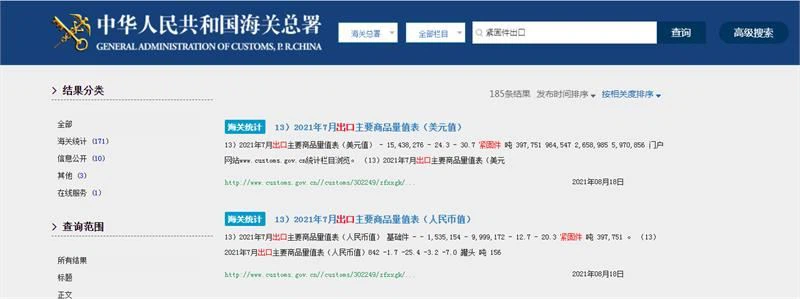
As an important part of the manufacturing industry, the fastener manufacturing industry is still in the stage of strong export demand. According to the statistics of the General Administration of customs, the domestic fastener export volume in July 2021 was 397751 tons, with a year-on-year increase of 4.9%; From January to July, the cumulative export volume was 2658985 tons, a year-on-year increase of 20.9%.
There is a strong demand for fasteners. Under the background of global carbon compliance and carbon neutralization, the manufacturing industries such as new energy energy energy-saving and environmental protection equipment, rail transit equipment, engineering machinery, large ships and aerospace equipment represented by wind power are booming. The prosperity and development of downstream industries directly affect the expansion of market demand for high-strength fasteners in the upstream.
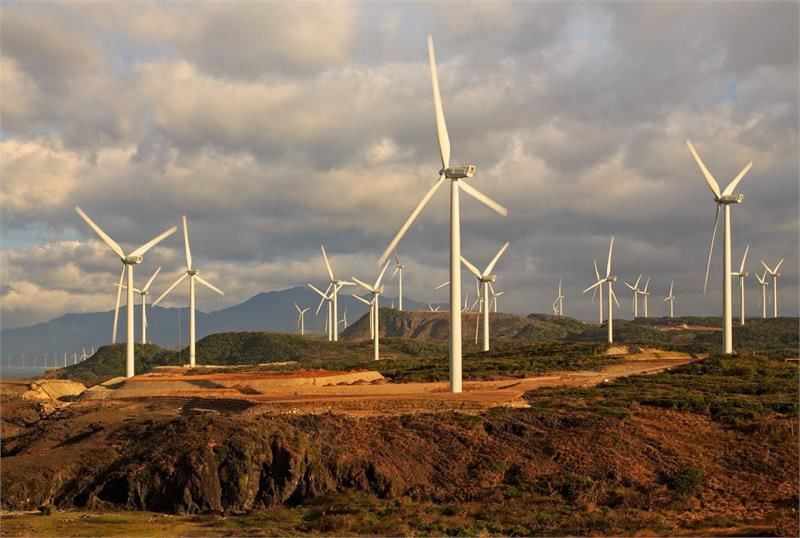
China's policies promote the "made in China 2025" strategy and implement the "strong industrial base" project. As the basic industry of high-end equipment manufacturing industry, high-strength fastener manufacturing industry is an important link of strategic emerging industry. The state's attention to the wind power industry has provided strong policy support for the development of the fastener industry. Fastener enterprises can seize the "crisis", absorb and introduce advanced technologies at home and abroad, continuously carry out intelligent transformation of production lines, strengthen R & D cooperation and their own technology accumulation, make progress in the production process and technical difficulties of high-end fasteners, and gradually realize the mass production and distribution of key parts in high-end equipment manufacturing industry.


